AI MESSAGING • RIDES • DELIVERIES • SERVICES

Integrated into RIMSKY · Extended during the 2026 hackathon

Relay: informed service coordination

Current provider information. Remembered instructions. A clearer handoff.

Relay brings provider discovery, saved request review and confirmed entrance memory into RIMSKY’s Android app. Zetaris connects information across separate sources; Meterless adds persistent context and optional AI review. You inspect the request before approving the next step.

Who it helps
People requesting rides, deliveries and local services—and operators who need to understand the recommendation.
The problem
Provider information and pickup instructions are spread across different places, making a suitable service harder to choose and coordinate.
The result
A saved, inspectable request with source context, confirmed preferences and explicit approval before a provider handoff.
Zetaris · Federated evidence

Bring separate sources together

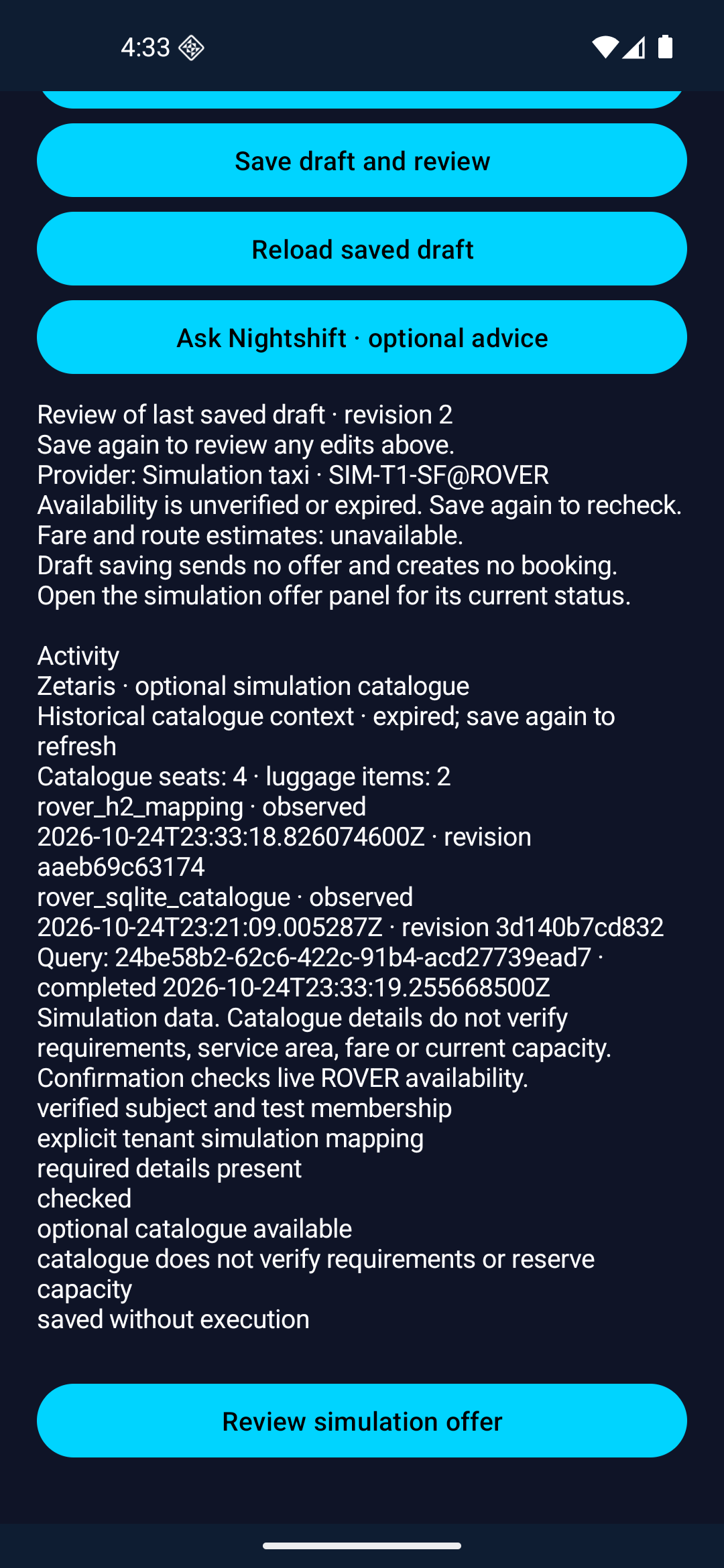
Zetaris joins RIMSKY provider mappings with an independently maintained service catalogue. Source revisions and observation times accompany the saved review, so a changed catalogue can inform a new request without rewriting its history.

Meterless H-MEM · Memory

Remember what the user confirms

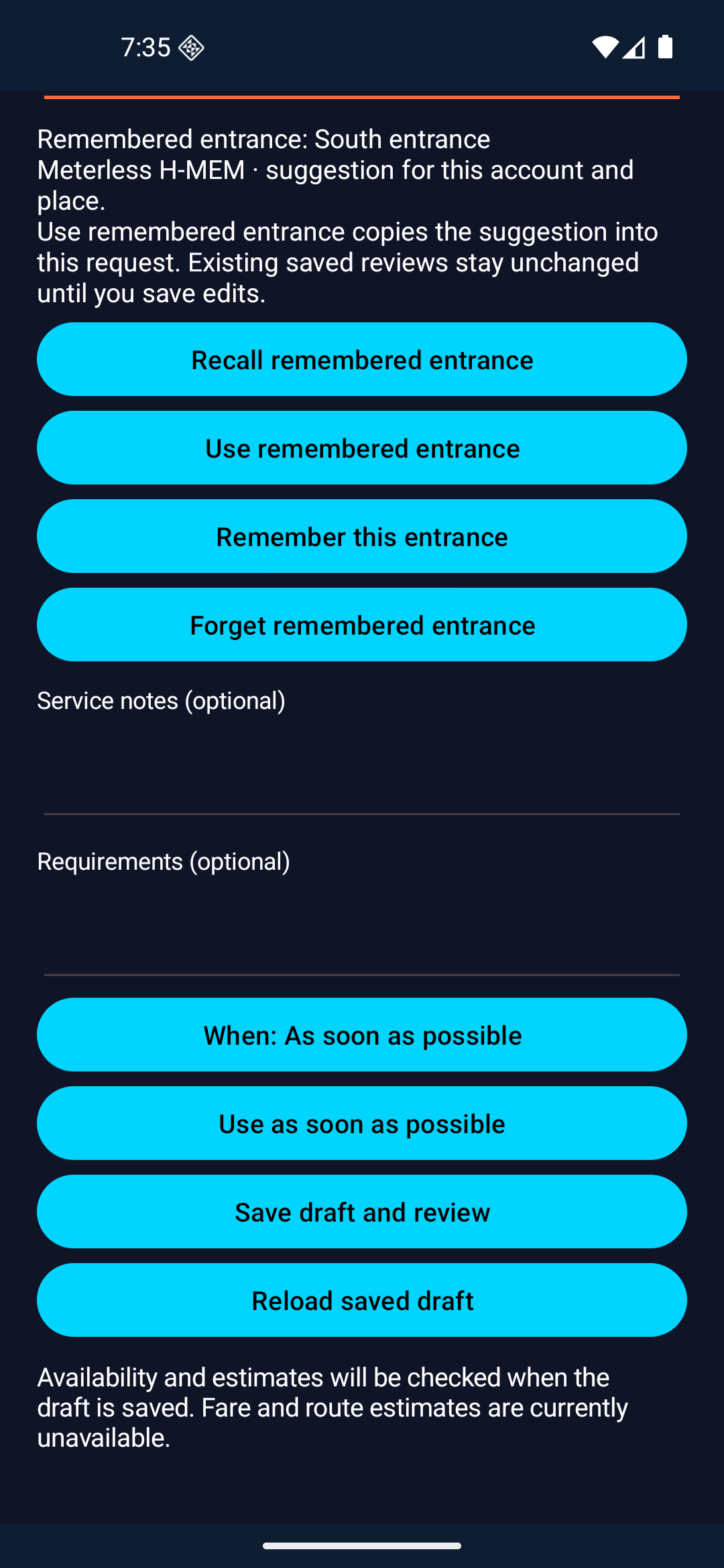
H-MEM stores an entrance preference only after confirmation. Recall supplies a suggestion the user can apply, correct or forget. Context is scoped to the signed-in user and tenant; a remembered preference does not silently replace the current request.

Nightshift + NVIDIA · Optional advice

Review a request from two perspectives

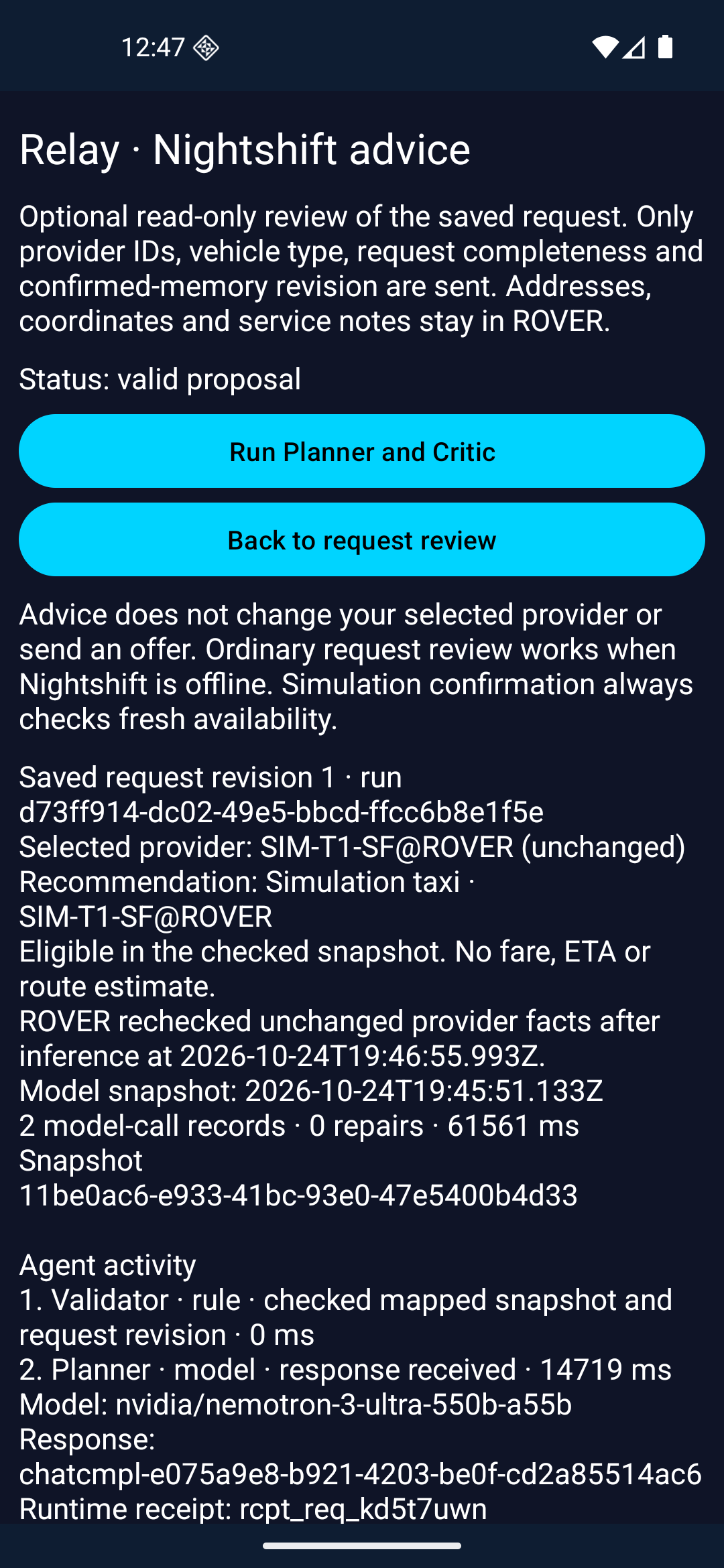
Meterless Nightshift routes separate Planner and Critic calls to NVIDIA Nemotron. They review bounded request context, while application checks reject invalid or stale advice. A model recommendation does not send an offer or accept a provider.

From discovery to a reviewed handoff

  1. Discover

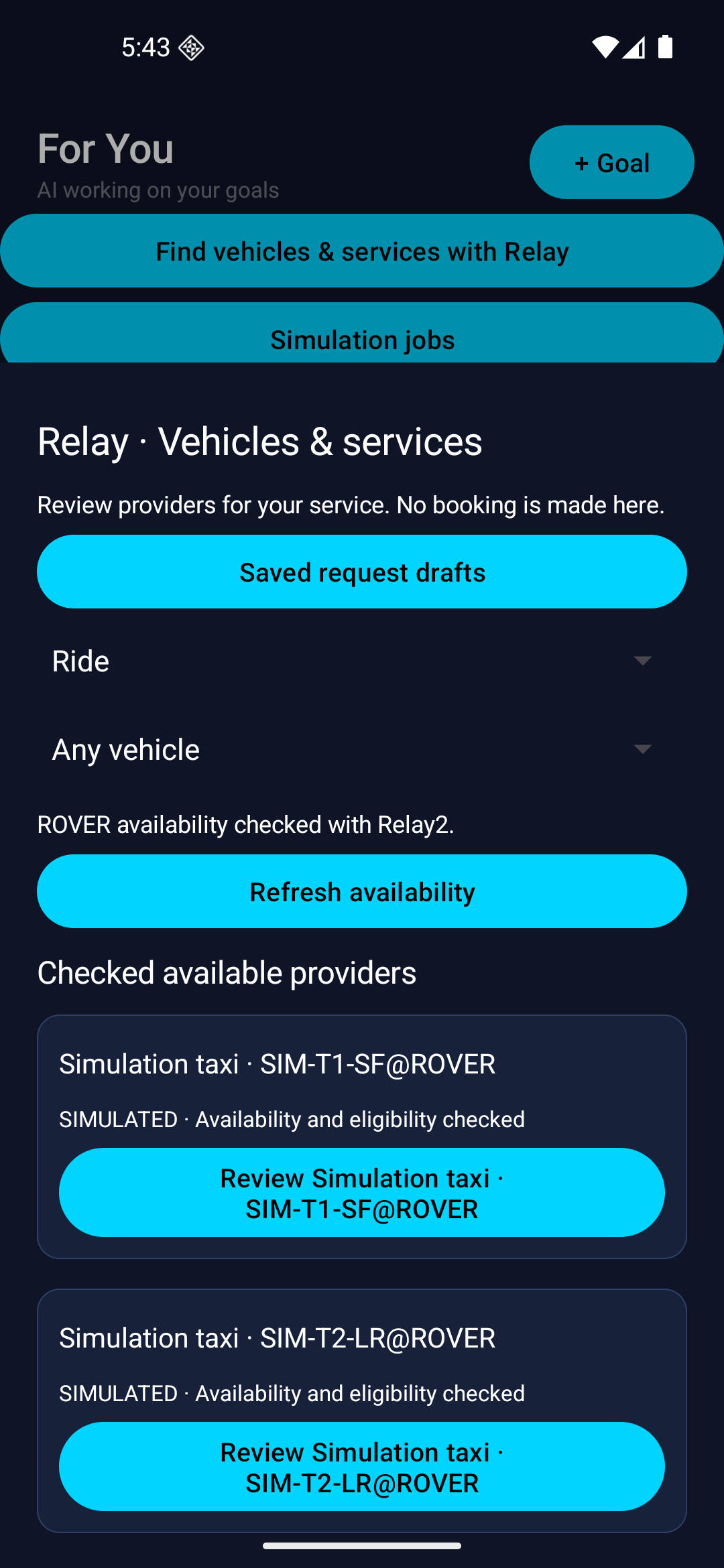
    Find vehicles and services with Relay. Distinguish checked availability from providers that have only been discovered.

  2. Prepare

    Add request details and pickup instructions. Apply a confirmed entrance preference when it is useful.

  3. Review

    Save the request, inspect available source context, and optionally ask Nightshift for Planner/Critic advice.

  4. Approve & track

    Explicit user approval and a separate provider acceptance govern the handoff. Follow the result in RIMSKY.

Zetaris and Meterless are optional enhancements to the core RIMSKY workflow. In the tested local simulation, requests and handoffs continued with Nightshift and Zetaris stopped. Current provider checks and explicit approvals remain required.

Inside the integrated Android app

Actual recorded RIMSKY screens from the local integration. Select a screenshot to inspect its full-size details.

These screens show synthetic provider data and simulated operations. A catalogue record is not a reservation or proof of current capacity. The demonstration makes no real vehicle booking or payment.

1 minute 50 seconds · Narrated hackathon demonstration with on-screen captions. Edited from actual local native recordings and screenshots; simulated fulfillment.

See the extension in action

From the 2008 foundation to today’s Relay

RIMSKY’s working multi-agent GPS coordination and automatic dispatch principles date to 2008. The 2026 Tinkerer project extended the platform with Relay’s native request review, memory and federated evidence.

The public repository provides Relay’s standalone sample and generic integration contracts. RIMSKY’s integrated Android application and private platform code are separate.

Read the demo transcript

RIMSKY Relay adds agent memory and federated service review to an existing Android platform. This is our Tinkerer entry.

RIMSKY combines provider discovery with service conversations. Users can find vehicles and services on a map, then contact providers.

Multimedia screens support service messages and configured AI creation tools. These existing platform features provide a practical setting for Relay.

Relay adds a native shortlist and saved request review. Current eligibility stays separate from discovery, and the user reviews the request before any offer.

Official Meterless H-MEM remembers an entrance only after confirmation. Later recall supplies shared context for the request. The user can correct it, with identity scope and revision checks.

Zetaris joins provider mappings with an independent service catalogue. Source revisions make the review inspectable. A catalogue change affects a new review while historical receipts keep their original evidence.

Nightshift routes optional Planner and Critic calls to NVIDIA Nemotron. Shared context, bounded repair and rule checks expose how the review develops. Stale evidence blocks an actionable result.

In the simulation, explicit approval sends an offer. A separate provider accepts it. RIMSKY tracks the result and supports cancellation. This demonstration makes no real vehicle booking or payment.

All four optional service combinations passed. The core simulation continued with Nightshift and Zetaris stopped. Native memory and recovery checks passed.

Judges can run Relay's web sample locally. Recordings show its RIMSKY integration. The host stays private, with existing work declared.