The RIMSKY platform
Agents that coordinate
services in the real world.
Explore the GPS directory, messaging and dispatch architecture behind RIMSKY—and the Relay extension that adds context to service review.
The technology
Hailing and dispatch, built around the customer
RIMSKY™ is a customer-centric multi-agent platform: the customer sees available service agents (rides, delivery, services) relative to their live location and chooses which ones converge.
2008
Working implementation developed in New Zealand while studying computer science remotely through Athabasca University. JADE and FIPA-compliant messaging combined real-time GPS-based service hailing, distributed coordination and automatic dispatch.
Agentic AI
Multi-agent technology of the same family that now underpins modern agentic AI.
Today
Rebuilt with modern AI development, the Android platform is offered to developers and entrepreneurs.
2008 prototype source and documentation available on request.
AI is built into every layer of RIMSKY
Multi-media creation
Any conversation can call AI to generate reusable image, audio and video service media.
- AI Studio inside the app
- Runway ML plus five other providers
- Generated media used straight in chat
GPS-integrated AI
The AI reads the live agent Directory, so answers and matches come from real positions.
- Ask who is nearby, act from chat
- AI-matched job suggestions
- Search by radius, type and seats
Multi-agent autonomy
Software agents register, discover and coordinate services. User approval and provider acceptance govern the service handoff.
- JADE multi-agent framework
- FIPA-compliant agent messaging
- A voice agent in every thread
How it works
One request, four steps
Example: a customer asks the in-app assistant for a nearby ride.
Ask
The customer asks the AI assistant in chat who is nearby.
Locate
The AI queries the live Directory by radius, type and seats.
Match
Matched vehicle and customer agents coordinate the request and share live GPS for pickup.
Create
AI generates image, audio or video updates, sent in the thread.
The Directory Facilitator: how agents find each other
Vehicle agent
- Registers into the server Directory
- Periodically samples GPS
- Keeps its location updated in the Directory
Directory Facilitator
A central server holds the live position of every registered agent.
- Holds vehicles, customers and delivery agents
- Searchable by radius, type, seats or driver preference
Customer agent
- Registers and updates its own GPS the same way
- Searches the Directory for nearby agents
- Selects and books: closest match or manual choice
Architecture
One agent layer, many AI providers
Adding an AI resource extends a layer without changing the platform.
- Customers
- Providers
- Operators
Live Directory of vehicles, customers and delivery agents
RIMSKY retains identity, current provider checks, user approval and separate provider acceptance.
- Zetaris · federated catalogue evidence
- Meterless H-MEM · confirmed preferences
- Nightshift + NVIDIA Nemotron · Planner/Critic advice
- OpenAI · text, image
- Anthropic · text
- Gemini · text
- Stability AI · image
- ElevenLabs · audio
- RunwayML · video
- ArcGIS · maps
- LiveKit · calls
- Supabase · profiles, jobs, contracts
- Cloudflare · edge hosting
- Stripe · in-app payments
Built on modern, scalable infrastructure
JADE + WebSocket
Live multi-agent coordination and real-time messaging between vehicles, customers, and servers.
Supabase
Profiles, jobs, contracts, and persistence for the whole marketplace.
LiveKit
Real-time audio and video calling between matched agents.
Runway ML
Image, audio, and video generation inside AI Studio.
ArcGIS
Geographic Information System data powering the live map.
Cloudflare + Stripe
Edge hosting and delivery, plus secure in-app payments.
The platform today
One app: discovery, dispatch, chat and AI media
What the Android app does, as shown in its screenshots.
Find providers
Browse nearby taxis, delivery agents, shipping providers, businesses, stores and bots on a live map.
Dispatch jobs
Create requests, send live dispatches, accept work, update status and complete contracts.
Chat with media
Send text, images, audio, video, quick service replies and AI-generated message content.
Generate media
Use AI Studio with Runway ML to create reusable image, audio and video service media.
The live map is the home screen
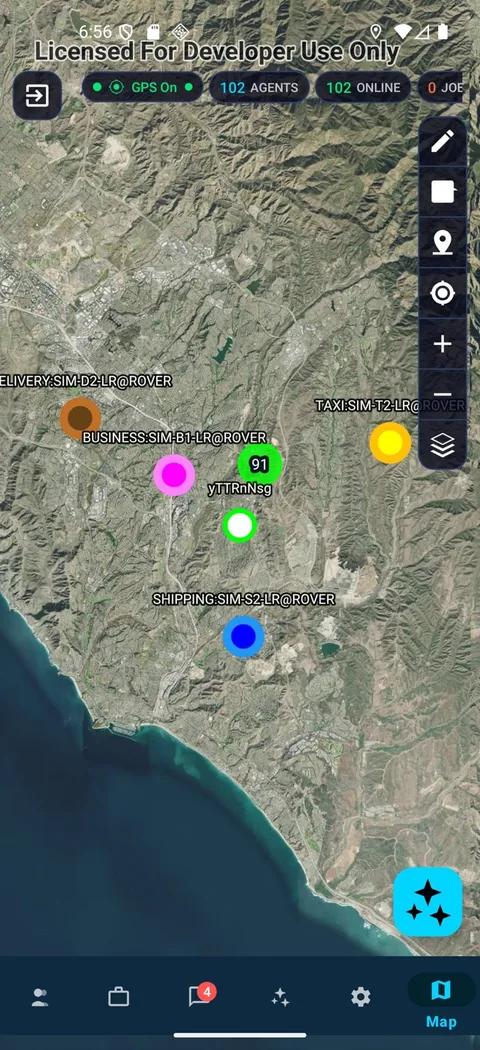
Screenshot of the Android app. Agents are clustered by type and update in real time.
Top status bar
- GPS
- Location mode and fix status; tap to toggle privacy mode.
- JADE
- Agent-framework connection: yellow means connecting, green means live.
- Agents / online
- Live counts of agents visible and broadcasting.
- Jobs
- Number of active service contracts in progress.
Bottom navigation
- Agents
- Jobs
- Chat
- AI
- Settings
- Map
All six tabs stay one tap away, and the map stays visible underneath every screen.
AI Studio: multi-media messaging, built in
Every thread can call an AI assistant, and every agent can generate reusable image, audio and video media, using Runway ML and other providers.
- OpenAI · text and image
- Anthropic · text
- Google Gemini · text
- Stability AI · image
- ElevenLabs · audio
- RunwayML · video
How a video request flows
- Prompt
- Runway task
- Background polling
- Saved to Generated Media
- Used in chat
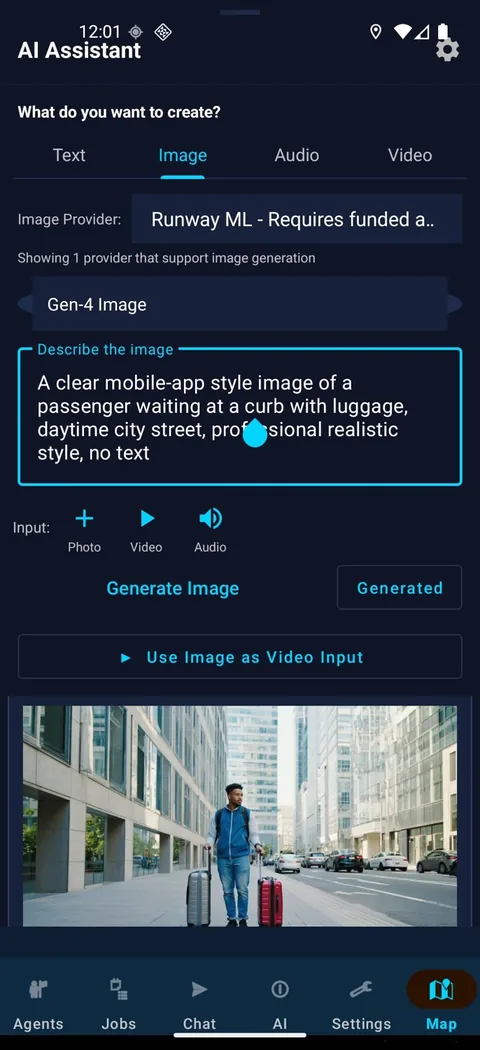
Screenshot of the Android app: the image-generation tab with a sample prompt and result.
From request to dispatch, screen by screen
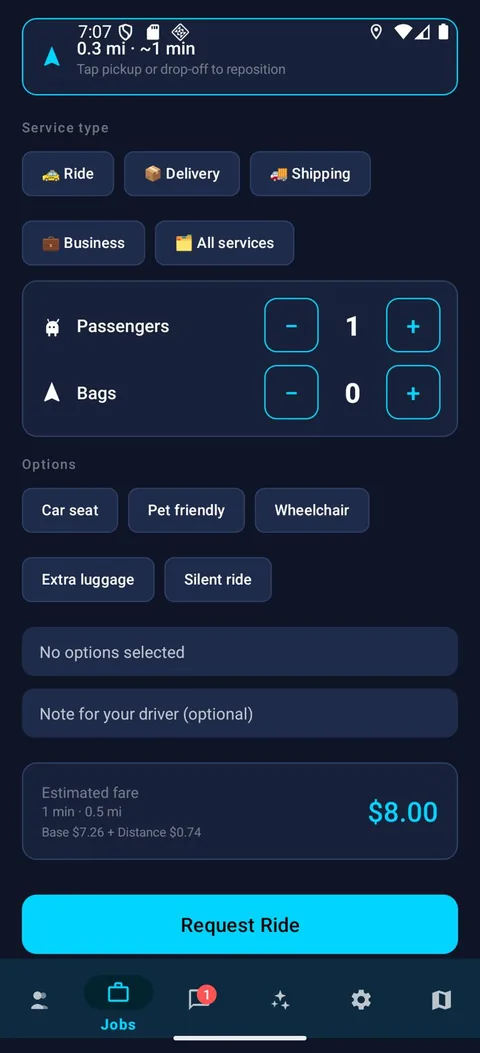
Request a service
Ride, delivery or shipping, with passengers, bags and options.
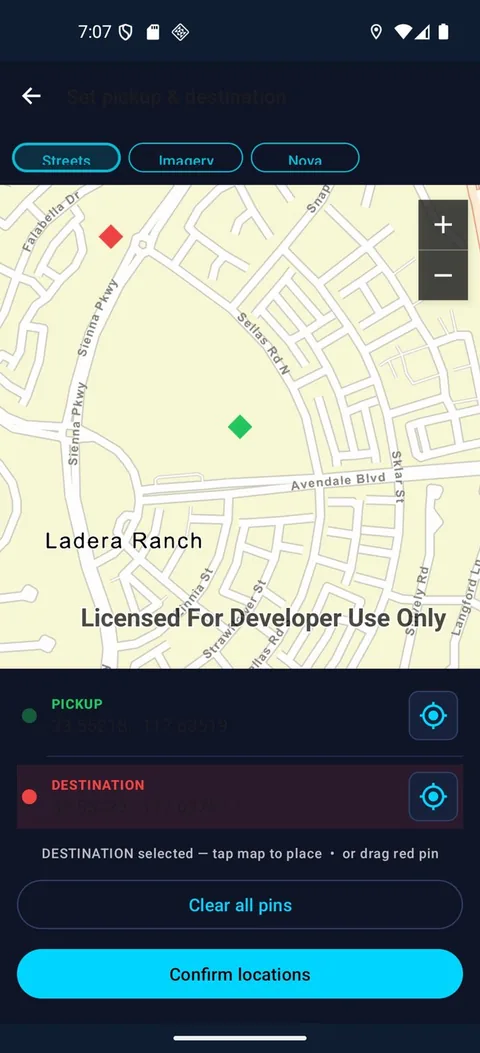
Set pickup and destination
Drop pins visually for dynamic pickup and drop-off.
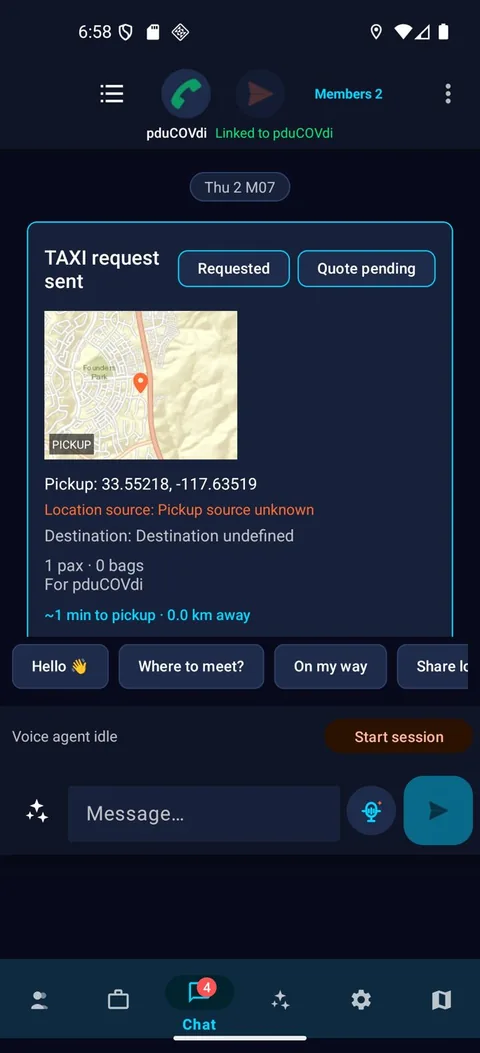
Chat and dispatch
Live requests, stock replies and a voice agent in every thread.
Tracking jobs, asking the AI, working anywhere
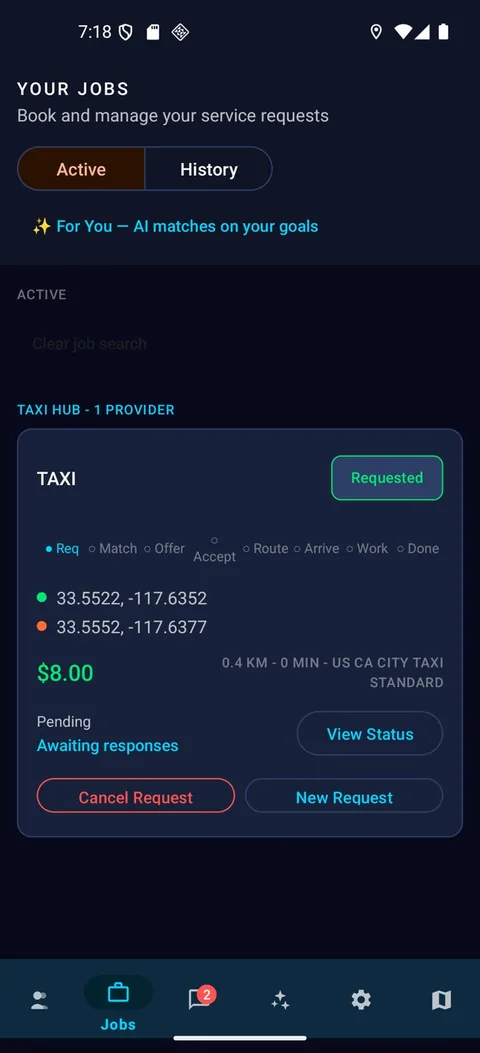
Job tracking
Manage active and historical jobs, with AI-matched suggestions.
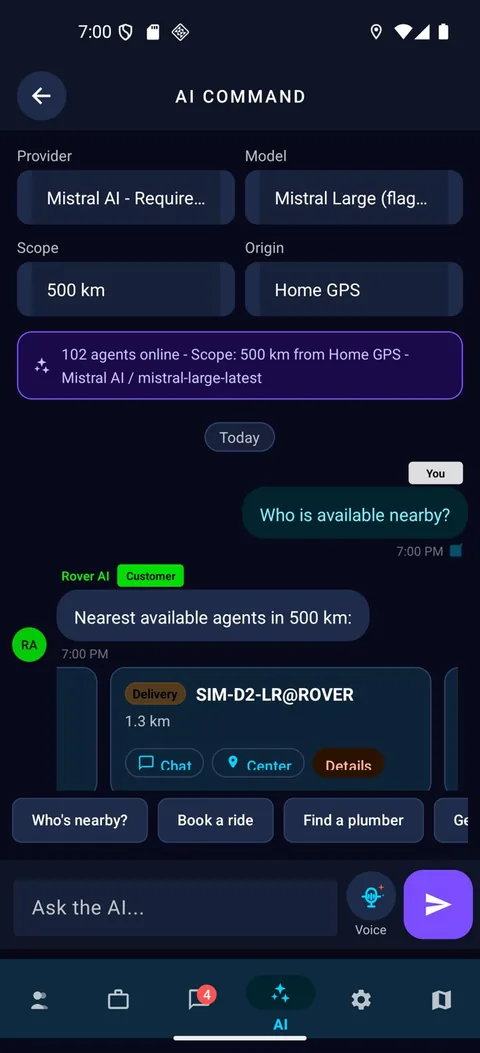
AI command
Ask the assistant who is nearby and act straight from chat.
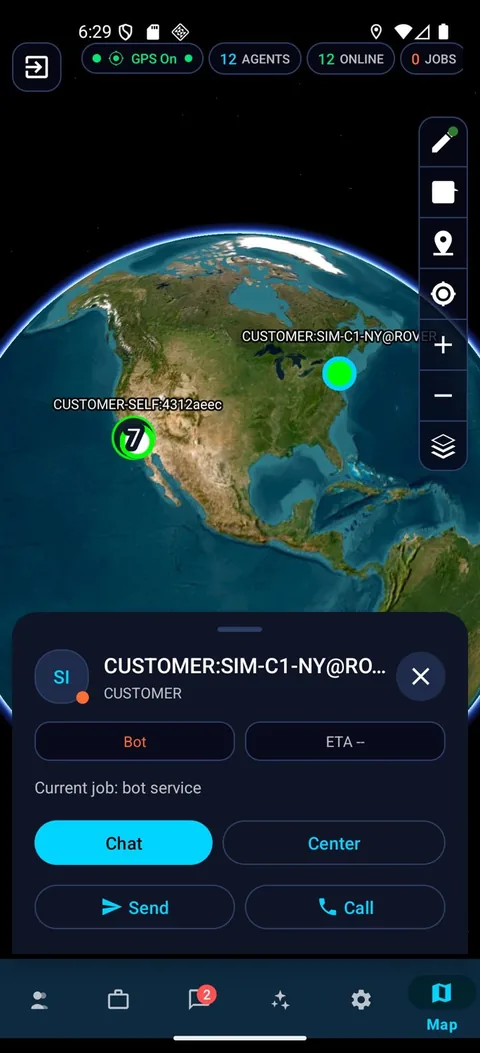
Global reach
The same directory model works across cities and countries.
Some views, including the global view, show simulated agents. They demonstrate the directory model and do not represent live coverage.
Visual differentiation
Beyond flat maps: immersive 3-D visualization
The platform renders agents, vehicles and cities in 3-D, giving customers, drivers and 3-D avatars a shared spatial view of the service world.
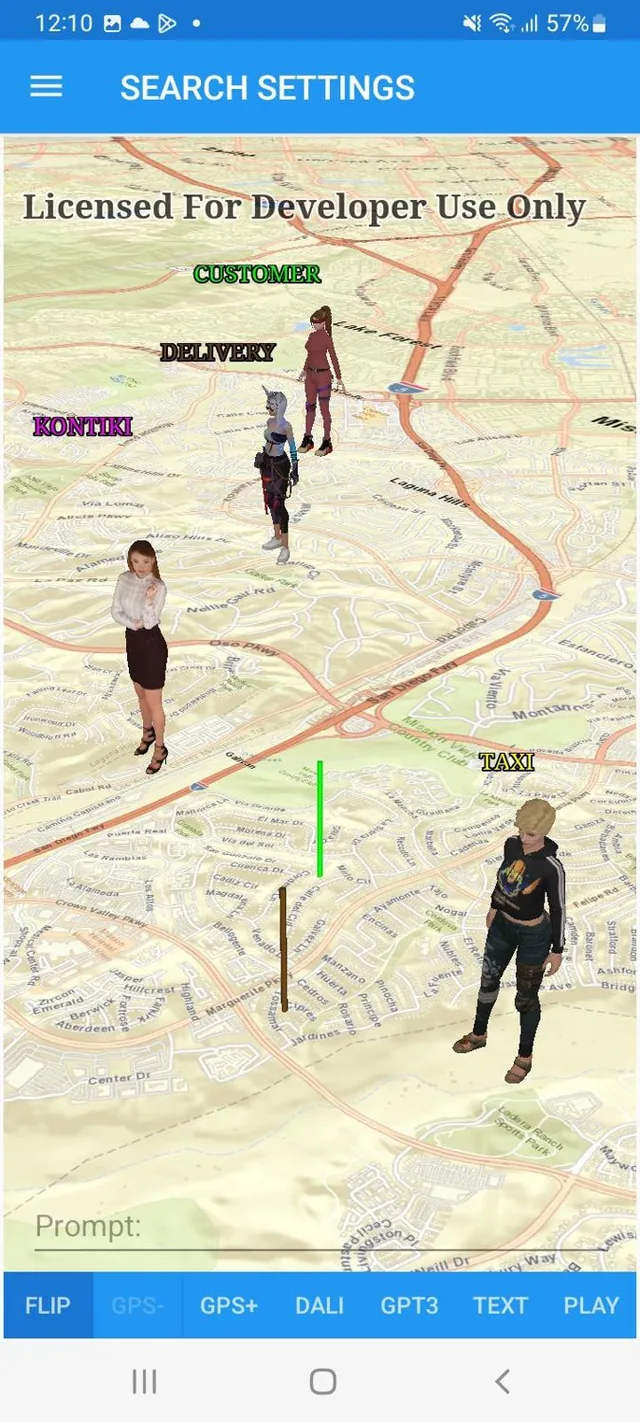
3-D agent avatars
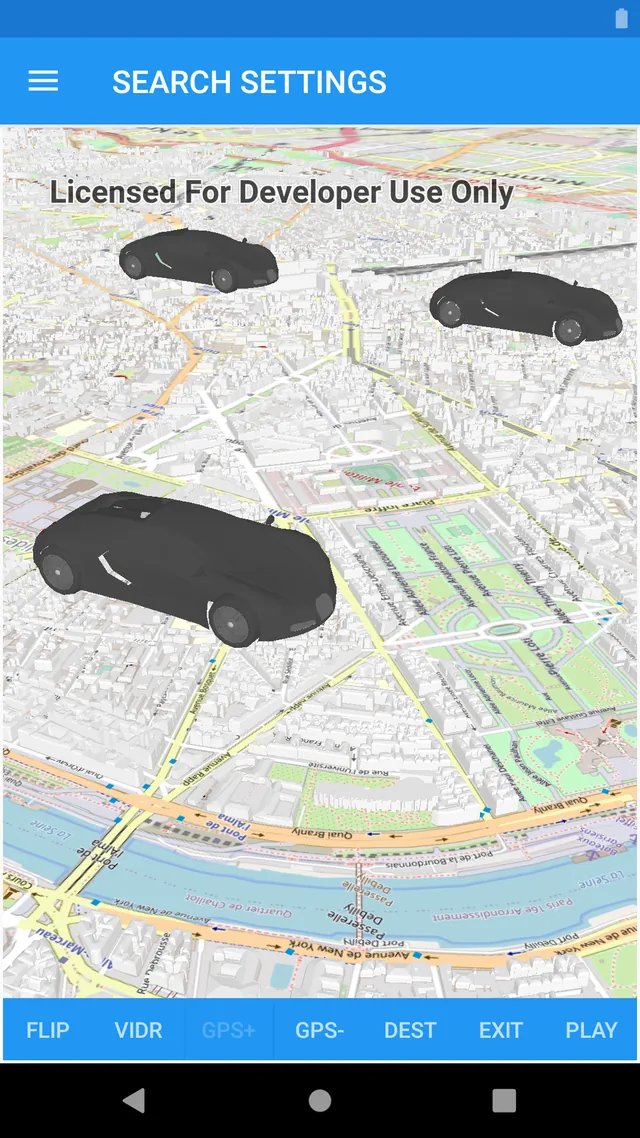
Taxi fleet demo
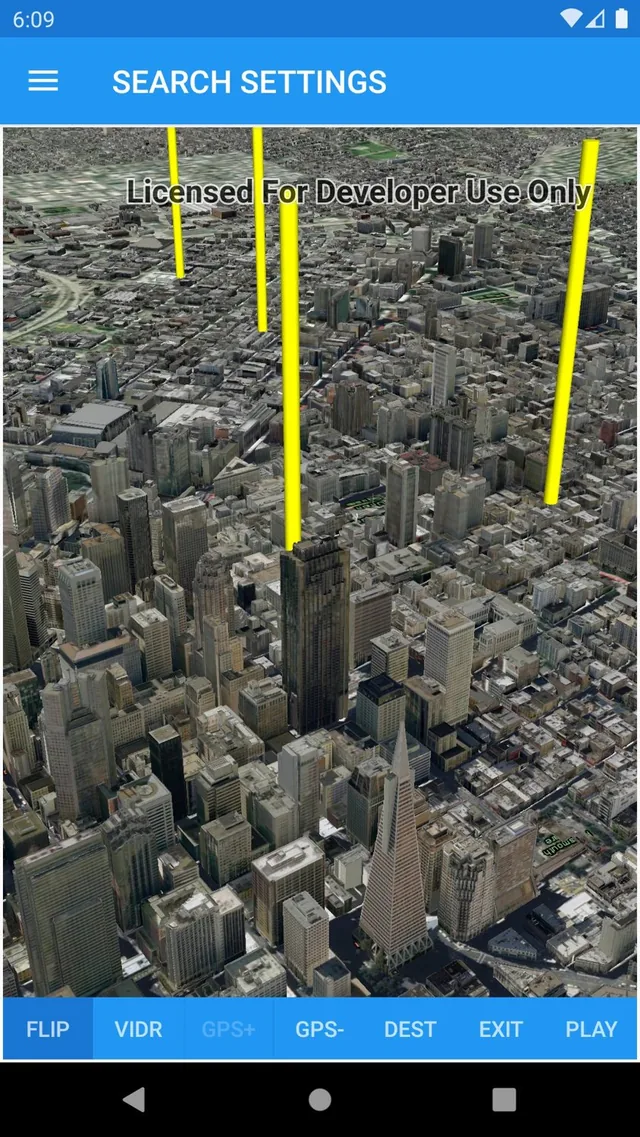
San Francisco skyline
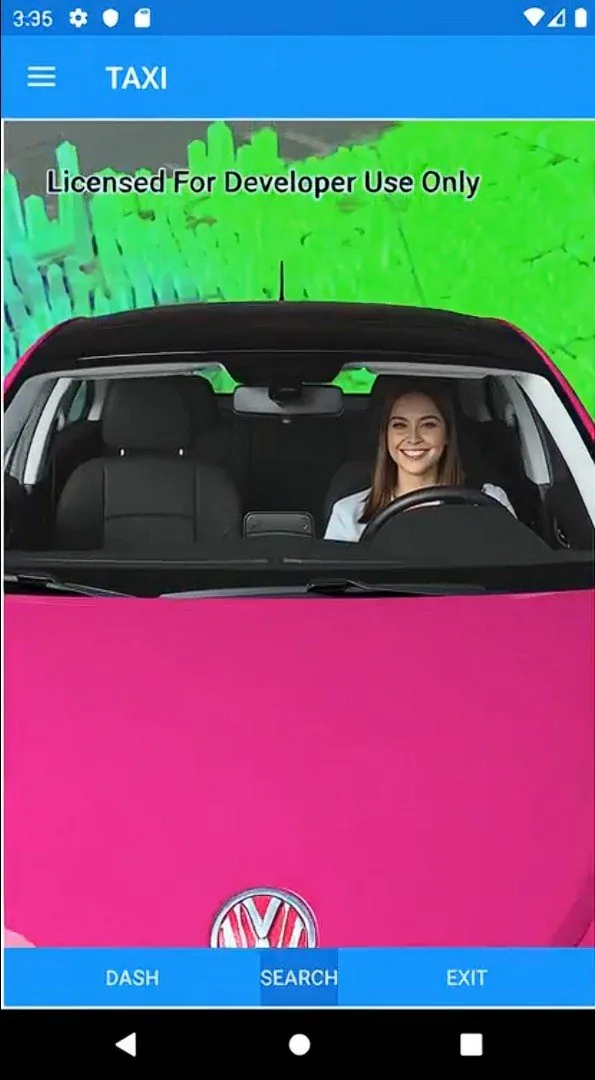
Branded, personalized vehicles
The screenshots carry a “licensed for developer use only” mark. This capability is available to developers under that license.
Where it fits
One dispatch engine, many potential service verticals
The directory-and-dispatch pattern is general. These are potential uses, not a statement of which are in use today.
Campus mobility
Event logistics
Local delivery
Fleet dispatch
Institutional mobility
Field services
Who it serves: three ways onto the network
Customers
Request rides, deliveries and local services. Track your provider live on the map and pay securely when the job is done.
Providers
Apply to provide rides, deliveries or other services. Complete identity and background checks, then start accepting jobs.
Operators
Launch a vetted marketplace for a campus, fleet or venue, with onboarding, fare governance and operator controls.
Roles as described in the platform design.
What’s next
Campus pilot
The pilot objective is a single agentic platform for requesting, dispatching, communicating and completing real-world services, piloted first on a university campus.
AI media messaging
Generative text, image, audio and video in every conversation.
Study and tutoring rooms
Real-time coordination spaces for academic support.
After-dark rides
On-demand, tracked campus transport at night, intended to support safer travel.
Food and delivery
Campus-wide dispatch for meals and packages.
E-bikes, scooters, golf carts
Shared micromobility fleets on the live map.
Campus-currency payments
Payments native to the university ecosystem.
Proposed next step